An Unusual Request

This unusual request came in from a client on the Euro Zone, some time back (Dec-2010). Bouquets and brickbats from clients are part of everyday life in the services business. But appreciation that is thoughtful would go a long way to positively motivate employees or just about anyone. Pradeep, the team lead on the Euro shift at that point of time received this request from a client, Kevin. Rini is her assistant. Read on… Hello Pradeep, As my usage has changed I will move to a pay as you go plan shortly. Before this happens I expect to have some un used time on my current plan. I believe there will be 2-3 hours left on the 14 of December. Given the exceptional help that Rini has provided I wonder would it be possible to use my unused time to allow Rini to leave for home early one day as a thank you to her for all her help ? Given I will have paid for her time I am hoping this unusual request is possible please ? Thanks and regards Kevin So simple a request, but so very thoughtful. The client thought it would be so nice to let Rini go early for a day, while having already paid for those hours. Did we have a choice with such a request? Nope, we just happily obliged. Incidentally, Rini has a young child at home and she was mighty happy with this wonderful gesture. Thank you, Kevin. You made her day! It is simple things that can make a huge difference in people’s lives and the way they perceive it. On a different note but on the same topic. Here is a RSA video I love, adapted from Dan Pink’s talk titled ‘The surprising truth about motivates people’. Happy viewing!! Sunder P CEO

An Unusual Request Read More »

This unusual request came in from a client on the Euro Zone, some time back (Dec-2010). Bouquets and brickbats from clients are part of everyday life in the services business. But appreciation that is thoughtful would go a long way to positively motivate employees or just about anyone. Pradeep, the team lead on the Euro shift at that point of time received this request from a client, Kevin. Rini is her assistant. Read on… Hello Pradeep, As my usage has changed I will move to a pay as you go plan shortly. Before this happens I expect to have some un used time on my current plan. I believe there will be 2-3 hours left on the 14 of December. Given the exceptional help that Rini has provided I wonder would it be possible to use my unused time to allow Rini to leave for home early one day as a thank you to her for all her help ? Given I will have paid for her time I am hoping this unusual request is possible please ? Thanks and regards Kevin So simple a request, but so very thoughtful. The client thought it would be so nice to let Rini go early for a day, while having already paid for those hours. Did we have a choice with such a request? Nope, we just happily obliged. Incidentally, Rini has a young child at home and she was mighty happy with this wonderful gesture. Thank you, Kevin. You made her day! It is simple things that can make a huge difference in people’s lives and the way they perceive it. On a different note but on the same topic. Here is a RSA video I love, adapted from Dan Pink’s talk titled ‘The surprising truth about motivates people’. Happy viewing!! Sunder P CEO

The Virtual Assistance Project – Social Experiment

On our invitation Andrew is posting his thoughts about the social experiment here on our blog. For more in-depth information on this project please read “Virtual Assistance: An Interview with Andrew Norman Wilson” in Media Fields Journal. Andrew talks about his project: I want to start this post by stating my belief that the critical dimensions of my project, which include this post, are articulated with the utmost respect for all the actors involved – Akhil, the other virtual assistants at GetFriday, and the Get Friday management. I want to be sure that this project is not understood as a way to blame or point fingers at individuals or the company as a whole. Setting the personal dimensions aside, this project is about an economy of informational labor that has inherited certain power relations from prior (though still simultaneous) forms of capitalism. In doing what I do I am not attempting to destroy or overthrow, but rather to question the relationships we take for granted or accept as inevitable every day by attempting to actually live the changes I would like to see. The people at GetFriday have been extremely open and helpful in allowing this to happen to a certain extent, and I doubt I would have found such openness at another virtual assistance service. As my artist statement for the project reads: The Virtual Assistance project began with research geared towards unpacking the relational system of GetFriday, a virtual personal assistant service based in Bangalore, India. Get Friday typically provides remote executive support, where a largely American client base is assigned a “virtual” personal assistant. I am a part of that client base, paying monthly fees for a primary assistant who works out of the Get Friday office in India. My “assistant” is a 25-year-old male Bangalore resident named Akhil. In paying for our relationship I am not trying to lighten my workload, but rather to attempt collaborative projects and even reversals of the normative outsourcing flow under a corporate contract arranged for one-way command. Using the service has been a method of engaging with, understanding, and reacting to an economy in order to learn, with the help of Akhil, how to peel back the corporate veneer, revealing limitations, histories, biographies, networks, power, desire, and more. Personal outsourcing initially came to my attention through the writings of proponents Thomas Friedman and Timothy Ferris as a method to shorten the typical American work week – to slough off excess labor onto globally integrated residents of developing countries. Global outsourcing tends to produce telematic relationships – telematic in the sense of a remote control over another’s labor. These conditions led to a number of questions about power relations that have been guiding me through the project. If power is defined as the ability to manipulate resources across space and time, to what extent can power in my relationship with Akhil and GetFriday be re-distributed amongst a service where the normative use is one-way command? How can this be reversed towards mutual assistance and collaboration? How can this relationship exceed the commodified forms intimacy and creativity privileged by service-based economies? The Get Friday service initially struck me as an opportunity for direct engagement with one of the dominant symbols of globalism—outsourced labor in India. GetFriday’s goal of “enhancing value to its clients” is consistent with the dominant use of outsourcing and its accompanying definition of value – profitability. Most people sign up for this service not to learn about their Indian assistants or to engage in a dynamic version of a pen pal relationship, but rather to outsource low-end tasks for a low price. However, profitability is not the fundamental horizon in which my project is formed. Profitability is a term of economic efficiency, and this is not an economically efficient relationship. In terms of social profitability, a much more efficient relationship would be to find the most “relevant” Indian gallery or artist willing to work with me, and try to make work about outsourcing. This project, while partially about outsourcing, more importantly uses outsourcing. The relationship-project is inherently problematic in a number of ways for me, and so the stakes are higher and the baggage is heavier. A crucial reorientation of my goals for the project came with my understandings of my contract with GetFriday. The power dynamics of the relationship are largely determined by the limitations put into play by the corporate contract and the accompanying forms of social engagement that are deemed acceptable by GetFriday management. I can’t have contact with Akhil outside of the official GetFriday communication channels, and all communication can be monitored by Akhil’s superiors. Akhil cannot organize or join a labor union. Akhil’s superiors insist that he represent himself as my “virtual assistant” in the project. In a way, these restrictions are the juice of the project. Not because I’m seeking to call Get Friday out for bad labor practices (it actually seems like a great place to work for many), but because I’m calling to question the dynamics of this whole economy, which Get Friday and I are just a small part of. Consistent with the sociological categorization of immaterial labor, Akhil performs labor in which he has to speak, communicate, and cooperate within an organization that has been normalized for economic efficiency. Though the work Akhil has done for this project (which is far less than the work I have done for it) benefits me in certain ways (I have been invited to present the work internationally), the project has become an attempt to allow for that forced speech, communication, and cooperation to become a will to speak, communicate, and cooperate. By asking Akhil to relax and write down his thoughts in front of his favorite view of Bangalore, or asking him to assign me a task, or asking him what he wants to be working on at work, we have achieved this to varying degrees. Akhil told me he wanted the opportunity to work on design and engineering projects in


The Virtual Assistance Project – Social Experiment Read More »

On our invitation Andrew is posting his thoughts about the social experiment here on our blog. For more in-depth information on this project please read “Virtual Assistance: An Interview with Andrew Norman Wilson” in Media Fields Journal. Andrew talks about his project: I want to start this post by stating my belief that the critical dimensions of my project, which include this post, are articulated with the utmost respect for all the actors involved – Akhil, the other virtual assistants at GetFriday, and the Get Friday management. I want to be sure that this project is not understood as a way to blame or point fingers at individuals or the company as a whole. Setting the personal dimensions aside, this project is about an economy of informational labor that has inherited certain power relations from prior (though still simultaneous) forms of capitalism. In doing what I do I am not attempting to destroy or overthrow, but rather to question the relationships we take for granted or accept as inevitable every day by attempting to actually live the changes I would like to see. The people at GetFriday have been extremely open and helpful in allowing this to happen to a certain extent, and I doubt I would have found such openness at another virtual assistance service. As my artist statement for the project reads: The Virtual Assistance project began with research geared towards unpacking the relational system of GetFriday, a virtual personal assistant service based in Bangalore, India. Get Friday typically provides remote executive support, where a largely American client base is assigned a “virtual” personal assistant. I am a part of that client base, paying monthly fees for a primary assistant who works out of the Get Friday office in India. My “assistant” is a 25-year-old male Bangalore resident named Akhil. In paying for our relationship I am not trying to lighten my workload, but rather to attempt collaborative projects and even reversals of the normative outsourcing flow under a corporate contract arranged for one-way command. Using the service has been a method of engaging with, understanding, and reacting to an economy in order to learn, with the help of Akhil, how to peel back the corporate veneer, revealing limitations, histories, biographies, networks, power, desire, and more. Personal outsourcing initially came to my attention through the writings of proponents Thomas Friedman and Timothy Ferris as a method to shorten the typical American work week – to slough off excess labor onto globally integrated residents of developing countries. Global outsourcing tends to produce telematic relationships – telematic in the sense of a remote control over another’s labor. These conditions led to a number of questions about power relations that have been guiding me through the project. If power is defined as the ability to manipulate resources across space and time, to what extent can power in my relationship with Akhil and GetFriday be re-distributed amongst a service where the normative use is one-way command? How can this be reversed towards mutual assistance and collaboration? How can this relationship exceed the commodified forms intimacy and creativity privileged by service-based economies? The Get Friday service initially struck me as an opportunity for direct engagement with one of the dominant symbols of globalism—outsourced labor in India. GetFriday’s goal of “enhancing value to its clients” is consistent with the dominant use of outsourcing and its accompanying definition of value – profitability. Most people sign up for this service not to learn about their Indian assistants or to engage in a dynamic version of a pen pal relationship, but rather to outsource low-end tasks for a low price. However, profitability is not the fundamental horizon in which my project is formed. Profitability is a term of economic efficiency, and this is not an economically efficient relationship. In terms of social profitability, a much more efficient relationship would be to find the most “relevant” Indian gallery or artist willing to work with me, and try to make work about outsourcing. This project, while partially about outsourcing, more importantly uses outsourcing. The relationship-project is inherently problematic in a number of ways for me, and so the stakes are higher and the baggage is heavier. A crucial reorientation of my goals for the project came with my understandings of my contract with GetFriday. The power dynamics of the relationship are largely determined by the limitations put into play by the corporate contract and the accompanying forms of social engagement that are deemed acceptable by GetFriday management. I can’t have contact with Akhil outside of the official GetFriday communication channels, and all communication can be monitored by Akhil’s superiors. Akhil cannot organize or join a labor union. Akhil’s superiors insist that he represent himself as my “virtual assistant” in the project. In a way, these restrictions are the juice of the project. Not because I’m seeking to call Get Friday out for bad labor practices (it actually seems like a great place to work for many), but because I’m calling to question the dynamics of this whole economy, which Get Friday and I are just a small part of. Consistent with the sociological categorization of immaterial labor, Akhil performs labor in which he has to speak, communicate, and cooperate within an organization that has been normalized for economic efficiency. Though the work Akhil has done for this project (which is far less than the work I have done for it) benefits me in certain ways (I have been invited to present the work internationally), the project has become an attempt to allow for that forced speech, communication, and cooperation to become a will to speak, communicate, and cooperate. By asking Akhil to relax and write down his thoughts in front of his favorite view of Bangalore, or asking him to assign me a task, or asking him what he wants to be working on at work, we have achieved this to varying degrees. Akhil told me he wanted the opportunity to work on design and engineering projects in
Pushing the frontiers of exploration

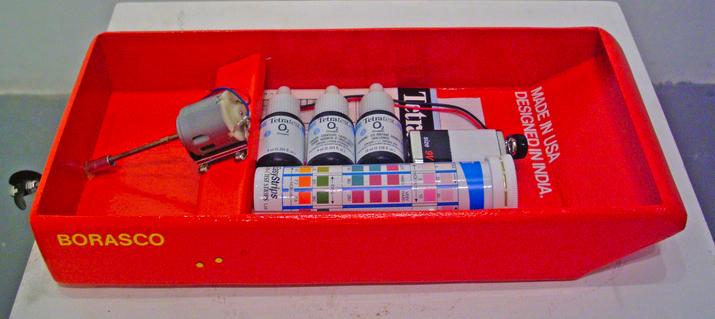
I wanted to introduce you to Andrew Norman Wilson, a 27-year-old MFA candidate at the Art Institute of Philadelphia Chicago and a client of GetFriday who has pushed the frontiers of outsourcing to attempt something unique in the context of globalization and the society, at large. And no, this is not an April Fool’s prank! His experiments have been featured on the Philadelphia Weekly and it makes an amazing read. Read more about it here: http://www.philadelphiaweekly.com/arts-and-culture/art/Virtual-Assistance-Humanizes-Outsourcing.html His work is pioneering and has explored a completely new dimension in the context of relationships in the global workplace. Our assistant Akhil in the process, probably re-discovered himself and most importantly his creativity, working for a client who sometimes even resorted to role reversals as part of the experiment. Unfortunately he left us for personal reasons, just after this experiment concluded. I distinctly recall the days when Andrew had probably just signed up (early 2009) and been there for a month or so. People used to come to me seeking approval on how much info can be shared, since his requests were weird. The information he asked for was mostly related to internal company policies or perhaps was simply too personal for comfort. There were no regular tasks, no deadlines but merely experiments with oneself and his environment. The initial alarm bells were to watch out for someone who is trying to study us and maybe clone the service. Or something even worse. But once we got to know him better, we understood that this was different and that he meant no harm for us. And most importantly, we agreed to this project because we needed to explore new territory to learn and renew ourselves. Here is a pic of the toy boat built by Andrew based on Akhil’s idea. Thanks Andrew for giving us this opportunity and wish him all the best! You can see more of the project on his website http://www.andrewnormanwilson.com/portfolios/35581-virtual-assistance On a different note, here is a fabulous illustrative video from the RSA (Royal Society of Arts, Manufactures and Commerce) on the topic of Empathic Civilization. Very relevant to Andrew’s experiments. http://comment.rsablogs.org.uk/2010/05/06/rsa-animate-empathic-civilisation/ Must confess that am a big fan of RSA Animate. Sunder P CEO

Pushing the frontiers of exploration Read More »

I wanted to introduce you to Andrew Norman Wilson, a 27-year-old MFA candidate at the Art Institute of Philadelphia Chicago and a client of GetFriday who has pushed the frontiers of outsourcing to attempt something unique in the context of globalization and the society, at large. And no, this is not an April Fool’s prank! His experiments have been featured on the Philadelphia Weekly and it makes an amazing read. Read more about it here: http://www.philadelphiaweekly.com/arts-and-culture/art/Virtual-Assistance-Humanizes-Outsourcing.html His work is pioneering and has explored a completely new dimension in the context of relationships in the global workplace. Our assistant Akhil in the process, probably re-discovered himself and most importantly his creativity, working for a client who sometimes even resorted to role reversals as part of the experiment. Unfortunately he left us for personal reasons, just after this experiment concluded. I distinctly recall the days when Andrew had probably just signed up (early 2009) and been there for a month or so. People used to come to me seeking approval on how much info can be shared, since his requests were weird. The information he asked for was mostly related to internal company policies or perhaps was simply too personal for comfort. There were no regular tasks, no deadlines but merely experiments with oneself and his environment. The initial alarm bells were to watch out for someone who is trying to study us and maybe clone the service. Or something even worse. But once we got to know him better, we understood that this was different and that he meant no harm for us. And most importantly, we agreed to this project because we needed to explore new territory to learn and renew ourselves. Here is a pic of the toy boat built by Andrew based on Akhil’s idea. Thanks Andrew for giving us this opportunity and wish him all the best! You can see more of the project on his website http://www.andrewnormanwilson.com/portfolios/35581-virtual-assistance On a different note, here is a fabulous illustrative video from the RSA (Royal Society of Arts, Manufactures and Commerce) on the topic of Empathic Civilization. Very relevant to Andrew’s experiments. http://comment.rsablogs.org.uk/2010/05/06/rsa-animate-empathic-civilisation/ Must confess that am a big fan of RSA Animate. Sunder P CEO

A New religion

The world’s second most populous nation went into a tizzy on Wednesday, 30th March. All because of a cricket match. Well, it wasn’t just any cricket match though. It was the World Cup semi-final between arch rivals and neighbors, India and Pakistan. It obviously had the advertisers and the media bandwagon salivating at the prospect of a never before kind of audience watching the Big Match. According to some initial reports, an estimated 67 million viewers were watching. In my opinion, a lot more would have, given that it is pretty hard to estimate the number of viewers per TV set, in a place like India. Any guesses? Compare this with the Super Bowl (National Football League) in the world’s richest nation, the US. An estimated national audience of 100 million watch the Super Bowl. The most expensive advertising happens during this time. A 30 second spot on the network costs a cool US$3 million. So what’s the rate for an ad spot during the World cup cricket match finals to be played this Saturday between India and Sri Lanka. Estimates put it at Rs.24 lakhs per 10 second spot or in dollar terms, that is US$ 160K per 30 second spot. Not bad, at all for a country where 410 million live below the poverty line of $1.25 per day!! Despite all that, Indian cricket with its own league format called IPL may just go past the Super Bowl economy, sometime in the near future. Why would I venture into thinking that such a thing could happen? Am banking on the fact that this CricketMania has evolved into a New Religion in this country of 1.2 billion, uniting people beyond caste, creed or religion. It evokes passionate and intense emotions, especially when a match like this happens between the neighbors. Apart from the usual celebrities there was also a twist of diplomacy this time, with the Indian Prime Minister informally inviting his Pakistani counterpart to India, for the match. Imagine Barack Obama and Hugo Chavez or Raul Castro sitting together for the Super Bowl game. Not that such back door diplomacy has helped either of the two countries in the past to get over their squabbling. India almost came to a stop for a good half of the day. While Pakistan officially shut down in entirety. My fellow colleague, Venky who can’t understand what the fuss is all about (he dislikes cricket, a rare breed in India) was raring to have a go at quantifying the GDP impact due to the productivity loss. Good luck to him. Most leading companies closed down for half of the day or started their work early to close before the match. Some of them made arrangements for employees to watch the match at the workplace. Given that we couldn’t shut down completely, we decided to telecast the match live on our premises. The bottom line was pretty simple: Don’t miss any calls; don’t miss any deadlines; don’t let down any of your clients. But go ahead, this is a new religion!! Here are some pics for you. (Click to enlarge) Sunder P CEO

A New religion Read More »

The world’s second most populous nation went into a tizzy on Wednesday, 30th March. All because of a cricket match. Well, it wasn’t just any cricket match though. It was the World Cup semi-final between arch rivals and neighbors, India and Pakistan. It obviously had the advertisers and the media bandwagon salivating at the prospect of a never before kind of audience watching the Big Match. According to some initial reports, an estimated 67 million viewers were watching. In my opinion, a lot more would have, given that it is pretty hard to estimate the number of viewers per TV set, in a place like India. Any guesses? Compare this with the Super Bowl (National Football League) in the world’s richest nation, the US. An estimated national audience of 100 million watch the Super Bowl. The most expensive advertising happens during this time. A 30 second spot on the network costs a cool US$3 million. So what’s the rate for an ad spot during the World cup cricket match finals to be played this Saturday between India and Sri Lanka. Estimates put it at Rs.24 lakhs per 10 second spot or in dollar terms, that is US$ 160K per 30 second spot. Not bad, at all for a country where 410 million live below the poverty line of $1.25 per day!! Despite all that, Indian cricket with its own league format called IPL may just go past the Super Bowl economy, sometime in the near future. Why would I venture into thinking that such a thing could happen? Am banking on the fact that this CricketMania has evolved into a New Religion in this country of 1.2 billion, uniting people beyond caste, creed or religion. It evokes passionate and intense emotions, especially when a match like this happens between the neighbors. Apart from the usual celebrities there was also a twist of diplomacy this time, with the Indian Prime Minister informally inviting his Pakistani counterpart to India, for the match. Imagine Barack Obama and Hugo Chavez or Raul Castro sitting together for the Super Bowl game. Not that such back door diplomacy has helped either of the two countries in the past to get over their squabbling. India almost came to a stop for a good half of the day. While Pakistan officially shut down in entirety. My fellow colleague, Venky who can’t understand what the fuss is all about (he dislikes cricket, a rare breed in India) was raring to have a go at quantifying the GDP impact due to the productivity loss. Good luck to him. Most leading companies closed down for half of the day or started their work early to close before the match. Some of them made arrangements for employees to watch the match at the workplace. Given that we couldn’t shut down completely, we decided to telecast the match live on our premises. The bottom line was pretty simple: Don’t miss any calls; don’t miss any deadlines; don’t let down any of your clients. But go ahead, this is a new religion!! Here are some pics for you. (Click to enlarge) Sunder P CEO

Back in action and the news

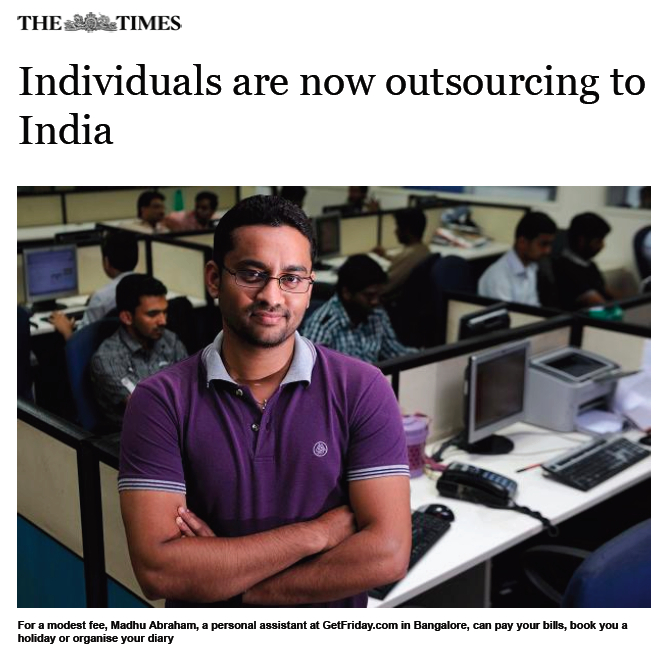
Back in Action We have been a little sluggish with our social media efforts till now. Reason why you haven’t seen too many blog posts since inception. But that is all set to change. In the recent past, in general we have been initiating a shift towards more openness and transparency. We expect that this will help our clients make better sense of their long distance personal, business relationship with their VAs. It’s a push towards opening our doors a little wider, for the whole world to see. So you will get to see a lot more posts from us, very frequently on what is happening out here. Stay tuned! Back in the News Leah Milner from the Times Money (UK) did a story on GetFriday titled “Individuals are now outsourcing to India”. After running a thorough road test wherein she tested Madhu Abraham (our VA) on a variety of tasks including some mischievous ones where she tests his tact, here is her verdict. “Testing the limits of the service, I request that he writes a humorous blog for Money Central on the cheapest wedding venues, but Maddy says that while he is happy to do the background research he is “not a good writer”. I reflect that it is probably just as well that I cannot outsource every aspect of my work or I would soon be out of a job.” Thanks, Leah!! Here’s the link, if you do have a Times subscription. http://www.thetimes.co.uk/tto/money/consumeraffairs/article2926600.ece (Unfortunately, the article cannot be accessed without a subscription and Times will take offense if we publish it without a syndication. Don’t quite get the logic. You take a picture and write a story about us for the entire world to see and won’t allow us to publish it without syndication!) Sunder P CEO

Back in action and the news Read More »

Back in Action We have been a little sluggish with our social media efforts till now. Reason why you haven’t seen too many blog posts since inception. But that is all set to change. In the recent past, in general we have been initiating a shift towards more openness and transparency. We expect that this will help our clients make better sense of their long distance personal, business relationship with their VAs. It’s a push towards opening our doors a little wider, for the whole world to see. So you will get to see a lot more posts from us, very frequently on what is happening out here. Stay tuned! Back in the News Leah Milner from the Times Money (UK) did a story on GetFriday titled “Individuals are now outsourcing to India”. After running a thorough road test wherein she tested Madhu Abraham (our VA) on a variety of tasks including some mischievous ones where she tests his tact, here is her verdict. “Testing the limits of the service, I request that he writes a humorous blog for Money Central on the cheapest wedding venues, but Maddy says that while he is happy to do the background research he is “not a good writer”. I reflect that it is probably just as well that I cannot outsource every aspect of my work or I would soon be out of a job.” Thanks, Leah!! Here’s the link, if you do have a Times subscription. http://www.thetimes.co.uk/tto/money/consumeraffairs/article2926600.ece (Unfortunately, the article cannot be accessed without a subscription and Times will take offense if we publish it without a syndication. Don’t quite get the logic. You take a picture and write a story about us for the entire world to see and won’t allow us to publish it without syndication!) Sunder P CEO

Closing down the German Service

I thought it might just help to share my perspective (the inside story) of what went wrong with the German service necessitating a shut down in December of 2010 after a rather successful run. In fact, the German service at that point of time was adding clients, making money and had by then been featured in every popular magazine and media in Germany that I can think of. Something that not many services can boast of. So to say “It had everything going for it.” Now having gone through it I will amend that to “Well almost!” So this is our story of failure at something that looked seemingly possible on the surface (at least to us). On the journey, we did learn some valuable lessons. And most importantly and thankfully, the lesson was not too costly to drown us and throw us back into oblivion. Here we go… 02nd June 2009: It was a momentous occasion! We launched our German language version of the Virtual Assistant services. It was done after a rather elaborate pilot with a few select clients in Germany over a 6 month period where we overlapped the English service with German, on a test basis. We had hired a German native, but of Indian origin who had just relocated to India for personal reasons. At the end of the pilot the verdict was overwhelmingly positive. So we went ahead to assemble a team of German speakers in place and trained them as VAs. The initial days were heady. Largely satisfied clients and employees who were even more satisfied due to the unique exposure such a job presented. This was probably the first kind of job where a non-native German speaker living in a non-German country gets the opportunity to speak & breathe German for 8 hours a day. Their proficiency in the language sky rocketed and so did their skills. Looked like a perfect model that could work because we provided a great platform for an aspiring German workforce in a predominantly English India. A year went by and we added more clients and needed more people to serve them. This is when we started running into a hitch. We had estimated the German resource pool in India to be rather small but still good enough for us to scale it up to a reasonable level. But slowly and steadily, it became increasingly difficult for us to get people with right skills and the language proficiency (the package). And we found that the companies that offered the most dreary jobs (merely translating documents) most certainly offered the biggest pay packets. We found it difficult to match them without being able to increase prices significantly. The market was still not ready to pay steeper prices on untried and untested things. Outsourcing at an individual or small business level for the German market was still a niche novelty and not mainstream. It was still experimental and not established. Added to that, the resources we had were becoming really good at their language and hence were most sought after by the MNCs. This model could still have worked if there was a constant pool of resources being created in significantly large numbers. The German pool in India was too small for it. In hindsight, I think the German language pool outside of Europe is just too small to support any significant, scalable outsourcing activity. I have heard from other outsourcing companies based in Poland / Romania that even there, it is not as easy to scale. Frequent attrition led to inability in providing stable services and that started affecting the quality of service that we delivered to our clients. We started getting frequent complaints and nothing much could be done about them. It was getting to a helpless situation and that was when we decided ‘it is OK to not provide services, if you can’t provide it right’. September 2010: The fateful decision to shut down was made and it was indeed a really hard decision. We first took the step of informing the German team employees about it. They understood. They were given a severance package that was more than the stipulation as per contract and some of them stayed back with us till the last week to help clients wind up, before moving to their new jobs. My sincere thanks to them. Given the kind of skills they had, finding another job was never a problem. We also informed our clients and gave them a 3 month notice period for the shut down. Our clients were incredibly understanding too. My thanks and apologies to them. Wherever possible, we helped them in the transition and closed the contract with every single customer, amicably by December 2010. It was a low point for us. But the decision helped ease a lot of pressure and brought back the focus to things we possibly had a better control over. Sunder P CEO

Closing down the German Service Read More »

I thought it might just help to share my perspective (the inside story) of what went wrong with the German service necessitating a shut down in December of 2010 after a rather successful run. In fact, the German service at that point of time was adding clients, making money and had by then been featured in every popular magazine and media in Germany that I can think of. Something that not many services can boast of. So to say “It had everything going for it.” Now having gone through it I will amend that to “Well almost!” So this is our story of failure at something that looked seemingly possible on the surface (at least to us). On the journey, we did learn some valuable lessons. And most importantly and thankfully, the lesson was not too costly to drown us and throw us back into oblivion. Here we go… 02nd June 2009: It was a momentous occasion! We launched our German language version of the Virtual Assistant services. It was done after a rather elaborate pilot with a few select clients in Germany over a 6 month period where we overlapped the English service with German, on a test basis. We had hired a German native, but of Indian origin who had just relocated to India for personal reasons. At the end of the pilot the verdict was overwhelmingly positive. So we went ahead to assemble a team of German speakers in place and trained them as VAs. The initial days were heady. Largely satisfied clients and employees who were even more satisfied due to the unique exposure such a job presented. This was probably the first kind of job where a non-native German speaker living in a non-German country gets the opportunity to speak & breathe German for 8 hours a day. Their proficiency in the language sky rocketed and so did their skills. Looked like a perfect model that could work because we provided a great platform for an aspiring German workforce in a predominantly English India. A year went by and we added more clients and needed more people to serve them. This is when we started running into a hitch. We had estimated the German resource pool in India to be rather small but still good enough for us to scale it up to a reasonable level. But slowly and steadily, it became increasingly difficult for us to get people with right skills and the language proficiency (the package). And we found that the companies that offered the most dreary jobs (merely translating documents) most certainly offered the biggest pay packets. We found it difficult to match them without being able to increase prices significantly. The market was still not ready to pay steeper prices on untried and untested things. Outsourcing at an individual or small business level for the German market was still a niche novelty and not mainstream. It was still experimental and not established. Added to that, the resources we had were becoming really good at their language and hence were most sought after by the MNCs. This model could still have worked if there was a constant pool of resources being created in significantly large numbers. The German pool in India was too small for it. In hindsight, I think the German language pool outside of Europe is just too small to support any significant, scalable outsourcing activity. I have heard from other outsourcing companies based in Poland / Romania that even there, it is not as easy to scale. Frequent attrition led to inability in providing stable services and that started affecting the quality of service that we delivered to our clients. We started getting frequent complaints and nothing much could be done about them. It was getting to a helpless situation and that was when we decided ‘it is OK to not provide services, if you can’t provide it right’. September 2010: The fateful decision to shut down was made and it was indeed a really hard decision. We first took the step of informing the German team employees about it. They understood. They were given a severance package that was more than the stipulation as per contract and some of them stayed back with us till the last week to help clients wind up, before moving to their new jobs. My sincere thanks to them. Given the kind of skills they had, finding another job was never a problem. We also informed our clients and gave them a 3 month notice period for the shut down. Our clients were incredibly understanding too. My thanks and apologies to them. Wherever possible, we helped them in the transition and closed the contract with every single customer, amicably by December 2010. It was a low point for us. But the decision helped ease a lot of pressure and brought back the focus to things we possibly had a better control over. Sunder P CEO

The Satyam Scandal

We at GetFriday understand the concerns raised in the wake of the Satyam scandal. The scandal is unfortunate and particularly shocking given that Satyam is the 4th largest IT firm in India. But the Indian industry believes that this is an isolated cased and an aberration. It may be recalled that some of the best Indian firms like Infosys have earned their reputation through adhering to good business ethics and the highest standards of corporate governance. It should be noted that other countries and industries also have bad apples. The likes of Enron, Worldcom and the recent Madoff case come to mind. Even in this case, the audit firm involved was PriceWaterhouseCoopers, one of the big 5. No matter how well planned a system is there will always be people who will find a way around it. The Indian regulatory system is strong and robust and is expected to act as swiftly as possible to ensure that the hard earned reputation of India Inc. is protected. GetFriday: We are not a listed company with public investors. We are closely held with the majority stakeholder being the TTK Group, a business conglomerate that is synonymous with trust, since 1928. The group is known for its conservatism and its unblemished reputation. Over the last 80 years, the group has worked with many international companies and brands including Cadburys, Ponds, Sara Lee and Durex. Many of its brands have been household names in India now for decades. While being a client is quite different from being an investor, we would like you to know that GetFriday is backed by an 80-year-old group with a rock solid foundation. Issues that are relevant to the context: 1) Security of financial information Right from the inception of GetFriday in 2005, we realized that the security of financial information was critical to our success. So we implemented a system that does not allow the assistants to access any credit card information. While online shopping on behalf of clients is an everyday affair at GetFriday, we have ensured that assistants can go only up to the check out stage and then have to hand over the shopping to their team-lead for completion. This is thanks to our secure Safe-Access system that requires two levels of authorization for any transaction. Each transaction is tracked and the details stored so that there is a clear audit trail. This has ensured a trouble free and safe operation with zero fraud reported so far since 2005. With our online billing system, all information is double encrypted, password protected and then secured with a pass phrase (never stored on any system). The information resides on a secure network with firewall protection and is PCI compliant to ensure that the information is secure. Again, the audit trail clearly fixes accountability and responsibility based on access. 2) Confidentiality of Personal / Business information As a matter of utmost precaution we ask all our assistants to communicate and handle tasks only through our CRM system (Pivotal from CDC Software, a top ten ranked CRM vendor globally). This ensures the tracking and safety of client information. Communicating on personal email ids is prohibited and even on official email ids is allowed only when there is a maintenance break or unscheduled breakdown on the CRM system. Our privacy policy and confidentiality clauses as per terms of service require every assistant to not share information pertaining to one client with another. We conduct regular training sessions and sensitize staff on the importance of these measures. Employees are required to sign an NDA and confidentiality agreement as part of their employment contract with us. If some clients require specific NDA’s signed then we review them on a case-by-case basis and then take it forward on a mutually agreeable basis. 3) Business Continuity While business continuity is a cause for major concern if someone is outsourcing critical parts of their business, it is imperative in the case of a VA service that there are no long-term contracts and commitments. If clients want to drop out, all that is needed is a month’s notice. Similarly if GetFriday is unable to provide service for any reasons or if the contract is terminated, then it is our duty and commitment to hand over confidential information or destroy it within the specific time mentioned in the NDA and confidentiality agreement. In fact, there can’t be a better option than a service like us which protects and insulates clients from the issues of attrition, sudden surges / drops in business, and unavailability of assistants on account on normal issues like vacation, sickness etc. This is as nice and dependable as it can get for small outsourcing that is not worth a million dollars. We have maintained utmost transparency with our clients across the globe and always encourage clients who are on a visit to India to drop by and get to know us in flesh and blood. Outsourcing is here to stay, and this scam shall not affect Indian businesses adversely. Read more on this. If you have any concerns or question, you can post a comment here or contact us through our website, www.getfriday.com

The Satyam Scandal Read More »

We at GetFriday understand the concerns raised in the wake of the Satyam scandal. The scandal is unfortunate and particularly shocking given that Satyam is the 4th largest IT firm in India. But the Indian industry believes that this is an isolated cased and an aberration. It may be recalled that some of the best Indian firms like Infosys have earned their reputation through adhering to good business ethics and the highest standards of corporate governance. It should be noted that other countries and industries also have bad apples. The likes of Enron, Worldcom and the recent Madoff case come to mind. Even in this case, the audit firm involved was PriceWaterhouseCoopers, one of the big 5. No matter how well planned a system is there will always be people who will find a way around it. The Indian regulatory system is strong and robust and is expected to act as swiftly as possible to ensure that the hard earned reputation of India Inc. is protected. GetFriday: We are not a listed company with public investors. We are closely held with the majority stakeholder being the TTK Group, a business conglomerate that is synonymous with trust, since 1928. The group is known for its conservatism and its unblemished reputation. Over the last 80 years, the group has worked with many international companies and brands including Cadburys, Ponds, Sara Lee and Durex. Many of its brands have been household names in India now for decades. While being a client is quite different from being an investor, we would like you to know that GetFriday is backed by an 80-year-old group with a rock solid foundation. Issues that are relevant to the context: 1) Security of financial information Right from the inception of GetFriday in 2005, we realized that the security of financial information was critical to our success. So we implemented a system that does not allow the assistants to access any credit card information. While online shopping on behalf of clients is an everyday affair at GetFriday, we have ensured that assistants can go only up to the check out stage and then have to hand over the shopping to their team-lead for completion. This is thanks to our secure Safe-Access system that requires two levels of authorization for any transaction. Each transaction is tracked and the details stored so that there is a clear audit trail. This has ensured a trouble free and safe operation with zero fraud reported so far since 2005. With our online billing system, all information is double encrypted, password protected and then secured with a pass phrase (never stored on any system). The information resides on a secure network with firewall protection and is PCI compliant to ensure that the information is secure. Again, the audit trail clearly fixes accountability and responsibility based on access. 2) Confidentiality of Personal / Business information As a matter of utmost precaution we ask all our assistants to communicate and handle tasks only through our CRM system (Pivotal from CDC Software, a top ten ranked CRM vendor globally). This ensures the tracking and safety of client information. Communicating on personal email ids is prohibited and even on official email ids is allowed only when there is a maintenance break or unscheduled breakdown on the CRM system. Our privacy policy and confidentiality clauses as per terms of service require every assistant to not share information pertaining to one client with another. We conduct regular training sessions and sensitize staff on the importance of these measures. Employees are required to sign an NDA and confidentiality agreement as part of their employment contract with us. If some clients require specific NDA’s signed then we review them on a case-by-case basis and then take it forward on a mutually agreeable basis. 3) Business Continuity While business continuity is a cause for major concern if someone is outsourcing critical parts of their business, it is imperative in the case of a VA service that there are no long-term contracts and commitments. If clients want to drop out, all that is needed is a month’s notice. Similarly if GetFriday is unable to provide service for any reasons or if the contract is terminated, then it is our duty and commitment to hand over confidential information or destroy it within the specific time mentioned in the NDA and confidentiality agreement. In fact, there can’t be a better option than a service like us which protects and insulates clients from the issues of attrition, sudden surges / drops in business, and unavailability of assistants on account on normal issues like vacation, sickness etc. This is as nice and dependable as it can get for small outsourcing that is not worth a million dollars. We have maintained utmost transparency with our clients across the globe and always encourage clients who are on a visit to India to drop by and get to know us in flesh and blood. Outsourcing is here to stay, and this scam shall not affect Indian businesses adversely. Read more on this. If you have any concerns or question, you can post a comment here or contact us through our website, www.getfriday.com

Got work, Get Friday – Hiccups and more…

Work at GetFriday can’t get any more hectic. Sign ups happening by the minute and everyone working round the clock and against it to assign assistants to clients on or before the announced deadline of 3 weeks. That has pretty much been the scenario everyday over the last month. On American Independance Day, our staffers on the US shift are taking a welcome break from work and hopefully should come back refreshed. Lot of reviews / blog posts about GetFriday have appeared on the web recently! Most of them nice and a few brickbats too, especially about our slow sign up process. We fixed a part of the problem by allowing people to download the sign up form, but that still doesn’t solve the problem of not having enough capacity. We are working on it. The other issue was that people got confused with our YourManInIndia (YMII) service and posted random tasks and even paid in advance there. Tim Ferriss for some reason continued to think of YMII for virtual assistance when he wrote the book, though GetFriday(Sister Concern of YMII) has been in existence for the last 22 months. The people in that division (YMII) handle a different set of things and aren’t equipped to handle virtual assistance and that caused a lot of confusion and delay in response to prospective client queries. We actually zeroed in on the particular task in YMII where people were ordering and put a clear sign saying ‘For virtual assistance, please go to GetFriday, kindly don’t post your requirement here’. That seemed to have worked. To put the record straight, YMII is a concierge service in India which is capable of handling any kind of tasks (that require physical presence) in India. Typically clients are NRIs (Non Resident Indians) and sometimes could be people of any nationality wanting to get something done in India. GetFriday, on the other hand is the sister service of YMII that provides virtual assistant service to global clients. Any thing that can be handled by a graduate VA and does not require our physical presence in the place where task is executed is game for GetFriday. At present we offer only a English language service, but there are many inquiries for German and French services. We may look at providing those in the future. Our web tracking team found these perspectives about Outsourcing or GetFriday, interesting or useful. 1) 50 ways to increase your productivity – Kim Roach at LifeHack.org 2) 10 Ways of overcoming Outsourcing objections – Jon Symons at ArtofMoney.org (Incidentally, Jon posted 10 reasons why he won’t outsource a few days earlier before he become a convert to outsourcing) 3) Case study on outsourcing – Ryan Norbauer at NotRocketSurgery.com 4) Hired an assistant – Tony Rush on WAHM.com 5) The Optimized Life – ‘Sparky looking young woman’ at TheOptimizedLife.com. 6) Four Hour Workweek for Parents – Amy Tiemann at CNET Blogs. 7) How to more efficiently make money online – MonetizeTraffic.com 8) Outsource or die – HarryBrelsford/SMB Nation on CAworld.com. (pdf file) 9) GetFriday : The Online Assistant – Adam at OutsideTheValley.com 10) Killer Startups – KillerStartups.com With the wave of interest in this service, there are bound to be cases where we can’t or don’t possibly meet the expectation of clients despite best efforts. You can be sure that GetFriday will analyze all such occurances and work towards rectifying them, sooner than later. Happy Independance Day to all our American clients and folks. -GetFriday Team

Got work, Get Friday – Hiccups and more… Read More »

Work at GetFriday can’t get any more hectic. Sign ups happening by the minute and everyone working round the clock and against it to assign assistants to clients on or before the announced deadline of 3 weeks. That has pretty much been the scenario everyday over the last month. On American Independance Day, our staffers on the US shift are taking a welcome break from work and hopefully should come back refreshed. Lot of reviews / blog posts about GetFriday have appeared on the web recently! Most of them nice and a few brickbats too, especially about our slow sign up process. We fixed a part of the problem by allowing people to download the sign up form, but that still doesn’t solve the problem of not having enough capacity. We are working on it. The other issue was that people got confused with our YourManInIndia (YMII) service and posted random tasks and even paid in advance there. Tim Ferriss for some reason continued to think of YMII for virtual assistance when he wrote the book, though GetFriday(Sister Concern of YMII) has been in existence for the last 22 months. The people in that division (YMII) handle a different set of things and aren’t equipped to handle virtual assistance and that caused a lot of confusion and delay in response to prospective client queries. We actually zeroed in on the particular task in YMII where people were ordering and put a clear sign saying ‘For virtual assistance, please go to GetFriday, kindly don’t post your requirement here’. That seemed to have worked. To put the record straight, YMII is a concierge service in India which is capable of handling any kind of tasks (that require physical presence) in India. Typically clients are NRIs (Non Resident Indians) and sometimes could be people of any nationality wanting to get something done in India. GetFriday, on the other hand is the sister service of YMII that provides virtual assistant service to global clients. Any thing that can be handled by a graduate VA and does not require our physical presence in the place where task is executed is game for GetFriday. At present we offer only a English language service, but there are many inquiries for German and French services. We may look at providing those in the future. Our web tracking team found these perspectives about Outsourcing or GetFriday, interesting or useful. 1) 50 ways to increase your productivity – Kim Roach at LifeHack.org 2) 10 Ways of overcoming Outsourcing objections – Jon Symons at ArtofMoney.org (Incidentally, Jon posted 10 reasons why he won’t outsource a few days earlier before he become a convert to outsourcing) 3) Case study on outsourcing – Ryan Norbauer at NotRocketSurgery.com 4) Hired an assistant – Tony Rush on WAHM.com 5) The Optimized Life – ‘Sparky looking young woman’ at TheOptimizedLife.com. 6) Four Hour Workweek for Parents – Amy Tiemann at CNET Blogs. 7) How to more efficiently make money online – MonetizeTraffic.com 8) Outsource or die – HarryBrelsford/SMB Nation on CAworld.com. (pdf file) 9) GetFriday : The Online Assistant – Adam at OutsideTheValley.com 10) Killer Startups – KillerStartups.com With the wave of interest in this service, there are bound to be cases where we can’t or don’t possibly meet the expectation of clients despite best efforts. You can be sure that GetFriday will analyze all such occurances and work towards rectifying them, sooner than later. Happy Independance Day to all our American clients and folks. -GetFriday Team

Coping with the deluge

GetFriday has been in the news quite often in the last month including getting onto the Wall Street Journal and an exclusive online daily in the UK called ‘The First Post’. Here are the links to those articles. Outsourcing your life – Ellen Gamerman for the Wall Street Journal Outsource your life – Linton Chiswick for The First Post. Coping with the deluge of inquiries ever since has been tough. No one wants to wait and everyone wants an instant assistant. The company has been hiring and training staff on the double. We also heeded some feedback on the web about our slow sign up process and put up the membership form on the website for download. But the resource allocation still has to be manual. Due to the shortage of staff we have also put up an announcement on the site about the wait time after sign up. Despite all this we have been keeping our promise to all those who signed up with us by either commencing service on the due date or well ahead of it. -GetFriday Management

Coping with the deluge Read More »

GetFriday has been in the news quite often in the last month including getting onto the Wall Street Journal and an exclusive online daily in the UK called ‘The First Post’. Here are the links to those articles. Outsourcing your life – Ellen Gamerman for the Wall Street Journal Outsource your life – Linton Chiswick for The First Post. Coping with the deluge of inquiries ever since has been tough. No one wants to wait and everyone wants an instant assistant. The company has been hiring and training staff on the double. We also heeded some feedback on the web about our slow sign up process and put up the membership form on the website for download. But the resource allocation still has to be manual. Due to the shortage of staff we have also put up an announcement on the site about the wait time after sign up. Despite all this we have been keeping our promise to all those who signed up with us by either commencing service on the due date or well ahead of it. -GetFriday Management